Course Syllabus and Introduction
Course Syllabus: Leadership and Managing Teams
Watch (2m35s)
You are a diverse group with a diverse set of goals. In this primarily asynchronous course, you can focus on the needs of your career. Your colleagues in the course and I look forward to supporting your product, process, or service as you move from invention to innovation. Whether you lead (or will lead) a lab, are looking to commercialize your invention through licensing or venture creation, or are just kickstarting your thinking, these modules will add value to your work.
Course Description
This course focuses on your varying leadership roles. We address:
- Leaders as Team Members: Most of your organizations are (or will be) built with a strong team model. We start with the teams you're in, then address your leadership role in those teams.
- Leaders as Designers: You are responsible for your organization's design. For some of you, it’s how you craft your own work. For others, it’s the organization of your team, lab, or venture. Build right from the start or make effective adjustments.
- Leaders as Champions: How you present your innovation is the foundation for all that follows — funding, commitment, and implementation success.
Our focus is on innovative settings and organizations. We will develop and balance critical competencies at the individual, interpersonal, team, and organizational levels – all to implement your innovations and build an ongoing innovation practice. Whether your focus is a new venture, a lab, a set of systems to commercialize your invention within an existing organization, or a policy group, your work in this course will support your shift from invention to innovation.
Objectives
After completing this course, you will be better able to lead your invention to innovation process through:
- Developing a customized entrepreneurial and innovation toolkit tailored to your professional goals and challenges.
- Enhancing leadership efficacy and team dynamics in science and engineering contexts.
- Strengthening your routine for effectively identifying and evaluating critical resources, including AI tools, readings, videos, and digital feeds, relevant to your field of interest, demonstrated by curating a comprehensive set of resources.
- Competency in advocating for and implementing innovative processes, products, and services, as evidenced by successfully pitching your product, process, or service.
Why Leadership?
Before we dive into the first module, let's put the course in perspective. Some of you lead teams, some of you lead entire organizations. All of us are members of a team of some sort, meaning all of us are responsible for contributing and offering leadership in our teams. We'll learn more about Prof. Amy Edmondson in our Leader as Team Member module. Listen as she puts leadership in context, regardless of your role.
Watch (1m56s)
Course Expectations
This course has three content modules and four synchronous sessions (including our brief information session). In preparation for the synchronous time together, you have a variety of assignments and activities.
Take special note of the due dates for the preparatory assessments, given the compressed nature of the course. Please be active in the Discussions before the start of the course and throughout our time together. I suggest you adjust the Canvas notification settings to match your workflow. You are responsible for communications about the course shared via the discussions and course announcements. You also have a fantastic opportunity to learn from your colleagues in the course.
Course Structure
You will find readings, videos, and other resources in each module. We leverage our asynchronous time by curating a starter set of materials and then you curating materials focused on your needs. You will share these with your colleagues (and me) through our weekly online discussions. You may have heard of or experienced "flipped" classes. This is a flipped course. As adult learners, especially as we consider the likely futures of work, we must take responsibility for our own learning. My role is curator and facilitator – not "sage on a stage." This means that we will not discuss every assigned reading, video, or other activity during our synchronous hours – unless you bring issues into the discussion. That said, I will not assign work that I do not believe specifically adds to the objectives noted above.
There is an immense amount of experience in the class. Please leverage your own experiences and illustrations. If we are successful, we should learn as much from each other as we do from our analysis of the material. Your previous experience, both positive and negative, is a valuable source of data for this learning. You will also be expected to find additional materials to support your needs and interests. You are building your skills as a lifelong learner across these topics.
Please use the Discussion boards for all course questions that are not health or grade-related. Please do not email me individually with course questions. Your question is probably of general interest to your classmates, and so it should go into the most relevant discussion thread.
Books and Materials
- Lencioni, P.M. (2012). The Advantage: Why Organizational Health Trumps Everything Else in Business. John Wiley & Sons. You must complete the assigned book sections before our Leaders as Team Members synchronous session. This is a leadership book, not a textbook (meaning a quick read). Some prior i2I participants say it changed how they think about the world. Only certain sections are assigned. However, after reading the introduction, you may just want to skim the whole book and focus on the parts that are most helpful to you now.
- Selected readings provided on Canvas or through external links
The module materials are designed to take about two hours (though I hope you will find yourself digging deeper into the topics as you save ideas for your future implementations).
Your contribution to each module of the course resource discussion should also target about 30 minutes of content. Recall that this is a credit course.
Learning and Assessments
Assessment Summary
[NOTE: Given the Canvas outage, we may lose some assignments and greater value will be placed on the Journal/Playbook assignment]
Grading norms will be observed in all Beedie School of Business courses. In other words, students who earn the highest marks relative to the class average will receive the highest grades.
Late assignments incur a 10% per day deduction. Canvas is set to Vancouver time (UTC -7), so be aware of your time zone.
| Course Journal | 40% |
| In-class Final Presentations | 30% |
| Module activities | 15% |
| Module resource contributions | 15% |
| Total | 100% |
You’ll note that attendance at the synchronous sessions is not graded except for the final presentation. Our synchronous time together is in support of your other assignments. We will not cover additional material except as it comes up in the Q&A. We will take on workshop activities and offer feedback for the related contributions and journals.
Reading and Course Schedule
The course is organized into three modules.
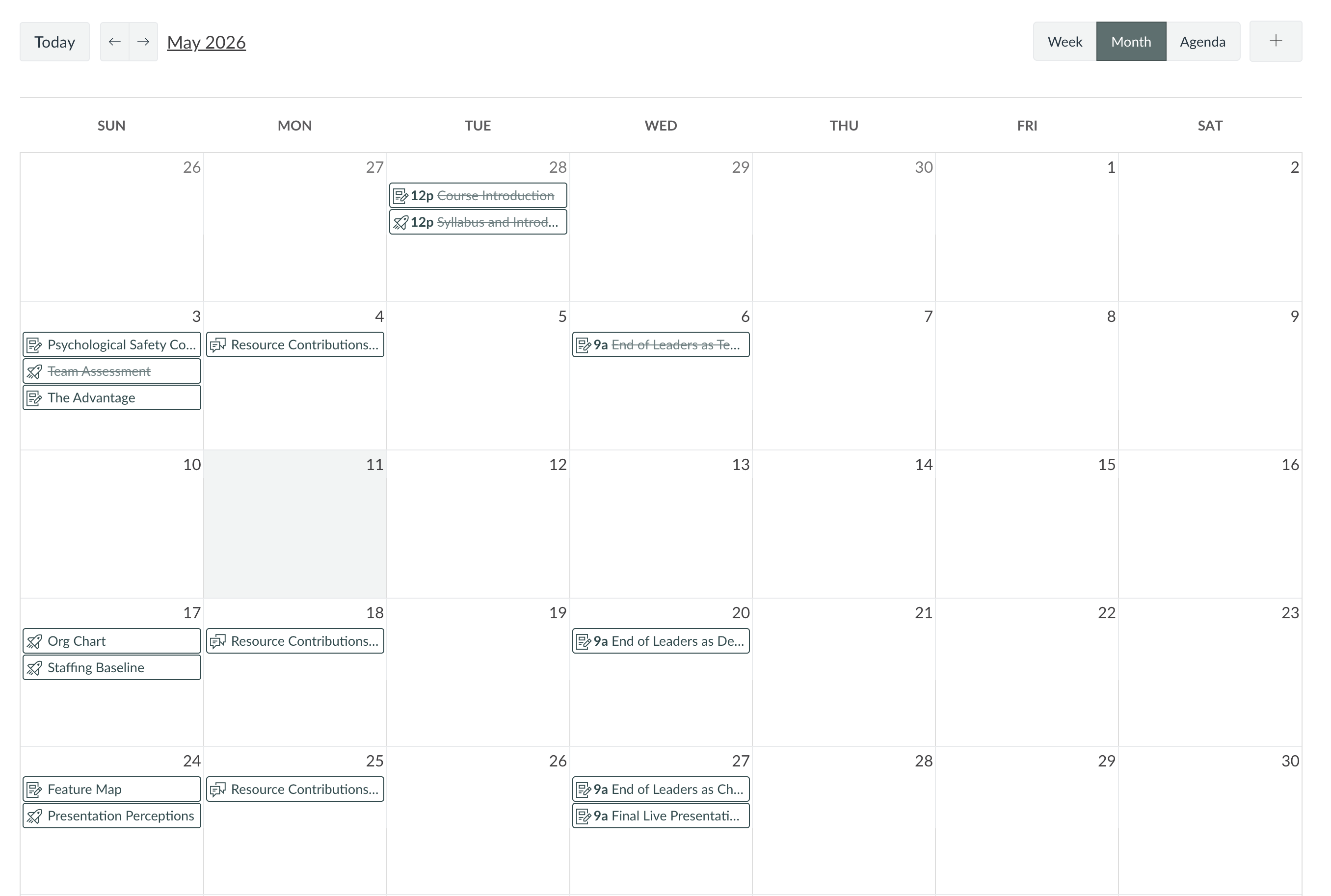
Our synchronous time for each module comes at the end of that module's material and activities. Complete all the to-dos by the noted due dates/times. The Canvas Calendar (see the far left navigation pane) is a valuable resource.
Academic Integrity & Formatting Requirements
Complete all graded assignments individually. You can discuss your approach with your classmates or others, but your final submission must be your individual work. (If you are in the course with co-workers on your innovation, contact me to discuss your assignments.)
I view generative AI in a copilot mode. I expect you to use all available tools and sources. Read my related article in The Conversation or my personal blog, Technology in Organizations.
From the SFU site on Academic Integrity: "If you are using any assistive technology to produce content that will be part of your graded work in the course, you must be transparent about the tools that you use. Undeclared use of the tool/technology will be considered a violation of the academic integrity policy. For example, if you use ChatGPT to assist you in your submission, you must acknowledge the use of the software and document the prompts used to generate the results. Be aware that any tool used will require you to evaluate the output for accuracy and be responsible for making the appropriate corrections."
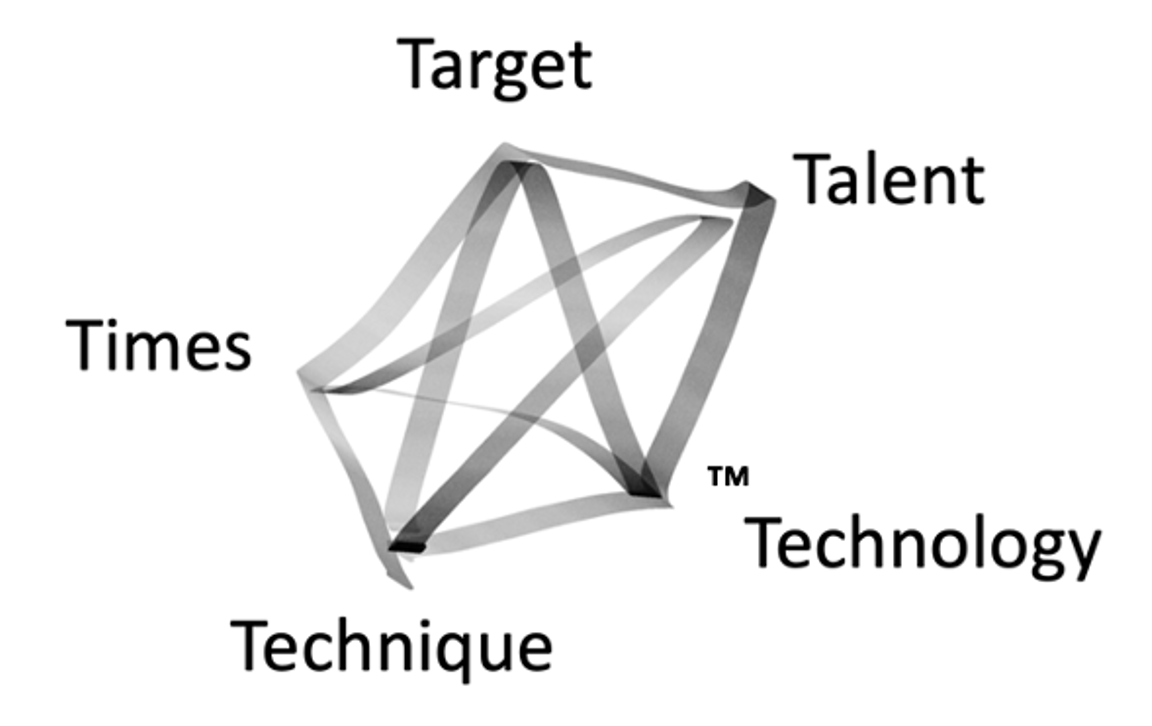
We don't have clear strategies for acknowledging the use of AI tools. Take a look at my post, T Is for Technology and Technique, to see my evolving thinking—and feel free to suggest improvements.
Ensure citations are in full APA (or another standard citation style) – not just a URL. Google Scholar will format the reference for you – as will other tools like Paperpile, Zotaro, and, hopefully, the AI of your choice. Beware AI-hallucinated references.
Use footnotes (rather than endnotes) as I read assignments online, and it is thus easier to see references on the screen. Please follow SFU and global intellectual property guidelines: Use quote marks to surround cut-and-pasted material, and always provide a reference for concepts that are not your own. Do not cite me, except for concepts where my co-authors and I are the proper sources. This citation strategy also serves as a knowledge management benefit, allowing you to find the full source later if needed. Lack of appropriate citations will incur minor to substantial deductions (including notification to Beedie and SFU integrity committees) based on the extent of the breach.
In preparing this material, I've leveraged paid Grammarly, paid ChatGPT, paid Claude, and various other new and improving AI. I am responsible for the final result.
Course Calendar